Dr. Jud on the Rich Roll Podcast







Overview
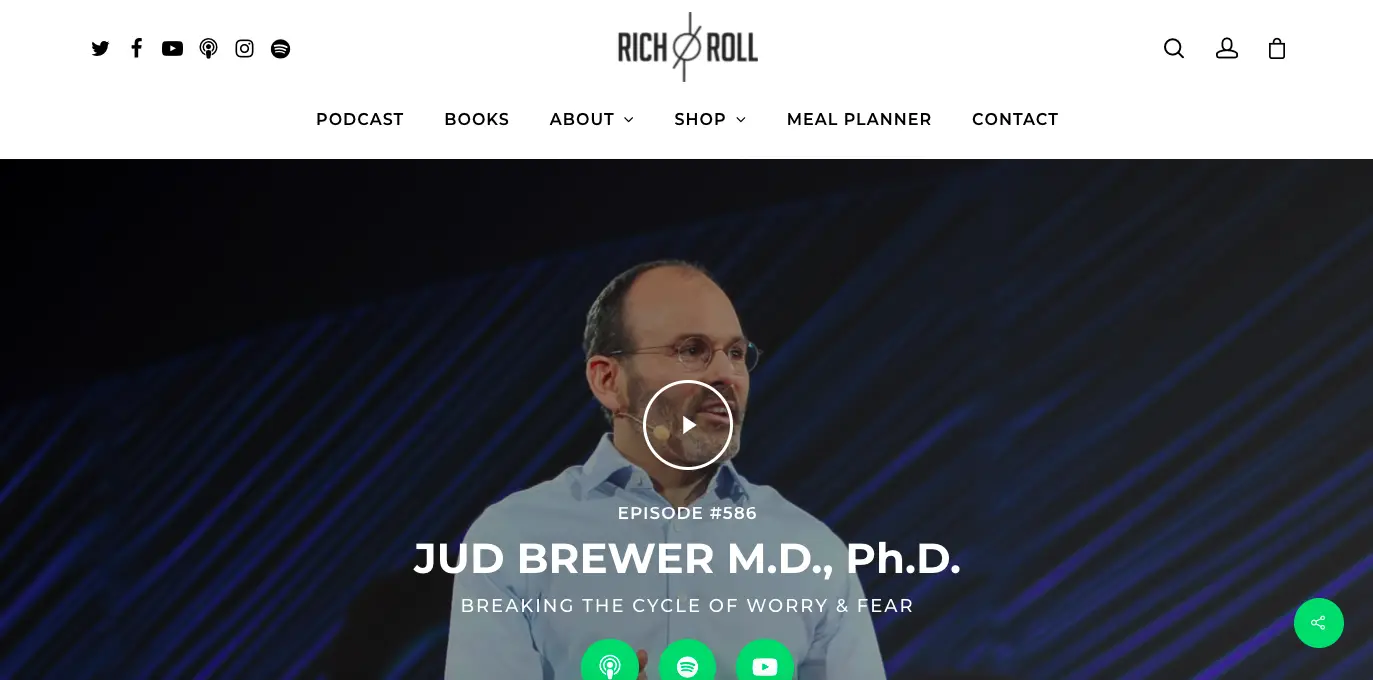
Dr. Jud returns to the Rich Roll Podcast for a second appearance to discuss his book Unwinding Anxiety and the habits that formed (or worsened) during the pandemic. The timing was pointed: by March 2021, most people had spent a full year under conditions that were essentially a recipe for bad habit formation. Stress, uncertainty, disrupted routines, and isolation combined to push millions toward coping mechanisms that felt good in the moment but compounded the problem over time.
Dr. Jud explains how the brain’s reward-based learning system (the same habit loop behind smoking and overeating) drives anxiety itself. When you face uncertainty, your brain reaches for worry as a default behavior because it feels like you’re doing something. That creates an anxiety habit loop that strengthens with every repetition. He walks Rich Roll through the three-gear framework from his book: mapping your habit loops (Gear 1), bringing curiosity to your cravings and anxious feelings (Gear 2), and finding a “bigger, better offer”: a behavior that’s genuinely more rewarding than the old pattern (Gear 3).
The conversation is practical and research-grounded. Dr. Jud draws on his lab’s clinical studies showing that this curiosity-based approach helps people change deeply entrenched habits: not by forcing themselves to stop, but by changing the underlying reward value their brain assigns to the behavior. For anyone who picked up pandemic habits they can’t seem to shake, this episode lays out the neuroscience of why those habits formed and a clear framework for unwinding them.
Key Takeaways
- The pandemic was a perfect storm for habit formation: Chronic stress and uncertainty push the brain toward familiar coping mechanisms: even ones that make things worse. The longer those patterns run, the more deeply they get wired into your brain’s reward system.
- Anxiety itself follows the habit loop: Worry is a behavior your brain learns because it feels productive. Mapping this loop (trigger, behavior, reward) is the first step to breaking it.
- Curiosity is the key to changing habits: Willpower fails under stress because the prefrontal cortex goes offline. Curiosity works differently: it helps you see the actual reward value of a habit, which naturally reduces the craving.
- The “bigger, better offer” completes the shift: Once you see that an old habit isn’t as rewarding as your brain assumed, you can replace it with something genuinely more satisfying: not through force, but through clear-eyed awareness.
How is your anxiety level? What habits, good or bad, have you formed in these past 12 months to cope with the insanity and uncertainty of having life upended and placed on indefinite hold? And most importantly: how are these habits serving or not serving you? Dr. Jud returns for a 2nd appearance on the podcast to discuss his new book ‘Unwinding Anxiety’ and ways we can rewire our minds to feel, perform, and live better.
 Listen to the podcast on iTunes, Stitcher, or online here.
Related Resources
- Unwinding Anxiety: The book discussed in this episode
- How Anxiety Becomes a Habit: Understanding the anxiety habit loop
- What Is the Habit Loop?: The framework behind Dr. Jud’s approach
- Curiosity as a Superpower: The tool that makes habit change possible
- Mindfulness Exercises: Practices for working with stress and anxiety
Free: 2026 Behavior Change Guide
Get Dr. Jud's latest guide based on his TED Talk, plus a 10-minute guided audio exercise and access to his newest research.
Get the Free GuideGoing Beyond Anxiety
Dr. Jud's cutting-edge anxiety reduction program that combines the latest neuroscience from his lab with compassionate coaching to help people control their anxiety, end worry habits, and learn to flourish.
Learn More